Every child has a right to a quality, safe and inclusive education
In Ethiopia, approximately 4.5 million children — 32% of those of official primary school age — are out of school, missing the chance to learn and thrive. Education remains a distant dream for many, particularly in rural areas where schools are far and resources are scarce. The gap between the wealthiest and the poorest children is striking, especially at the primary level, where access to quality education is limited.
Through focused efforts on improving access, quality, and safety in education, we are working to ensure that every child has the opportunity to learn and succeed. By partnering with schools, local communities and governments, we are driving practical, sustainable change to make quality education for all children a reality.
350,000 +
21,000 +
503,000 +
30
9,000 +
12
500 +
Facts and figures from 2025 data.
Our Approach
In times of crisis, education is often disrupted, yet it remains one of the most essential lifelines for children’s safety, well-being, and future. ChildFund’s Education in Emergencies approach ensures that children can continue learning during and after emergencies caused by conflict, displacement, or natural disasters. We work closely with communities, schools, and governments to restore access to safe, inclusive, and protective learning environments.
Our interventions include:
- Establishing temporary learning spaces in displaced or disaster-affected areas.
- Providing emergency education kits with age-appropriate learning materials and supplies.
- Training teachers to support children dealing with trauma and stress.
- Integrating psychosocial support and child protection into classroom settings.
- Constructing and rehabilitating schools and school facilities to restore access to education in post-conflict and disaster-affected areas.
Play Matters Project in Amhara Region: Following conflict in the Amhara Region, this project restored access to education for thousands of children. Funded by the International Rescue Committee, the project rehabilitated 10 schools (5 in Mersa and 5 in Woldia) that had been damaged by conflict. The comprehensive response included classroom repairs, provision of furniture and learning materials, school uniforms, dignity kits, school feeding programs, and WASH (water, sanitation, and hygiene) facilities. The project also trained teachers and students in pedagogy and learning-through-play techniques to enhance the quality of education. As a result, school attendance rose from 85% to 100%, reaching 10,136 children and helping ensure that learning continued even in the aftermath of the crisis.
Learn More: Supporting Schools Affected by Conflict in Amhara Region.
Learning begins at home, well before a child enters a classroom. The early years are critical for a child's development, shaping their ability to learn and thrive later in life.
ChildFund prioritizes early childhood development (ECD) as the foundation for lifelong learning. We equip caregivers with the knowledge and tools to create positive early learning environments at home.
By strengthening caregivers’ understanding of child development, we promote practices that support cognitive growth, emotional resilience, and overall well-being. We also focus on engaging male caregivers, who are often underrepresented in ECD, so that both parents are actively involved in their child’s early learning journey.
To provide conducive learning environments, we work with partners to build, renovate, and equip schools with child-friendly classrooms, ablution blocks, desks, and tables to make the learning environment comfortable for children.
ChildFund, in collaboration with the government, trains preschool and primary school teachers to use participatory learning methodologies that actively engage students in the classroom. We also support teachers in building positive relationships with their students, which is essential for creating safe and supportive learning environments.
To strengthen literacy instruction, we provide specialized training to local partner staff and model language teachers. We also establish language laboratories in schools to enhance reading, writing, and comprehension skills. These labs provide televisions, computers, recorders, electronic players, and earphones, turning language learning into an interactive experience that inspires students to engage more deeply with their lessons.
Learn more: How a language lab is transforming learning for students in Addis Ababa
To create inclusive learning environments, ChildFund supports schools by providing equipment that enables children with disabilities to participate fully in their education. This ensures that all children, regardless of ability, have equal
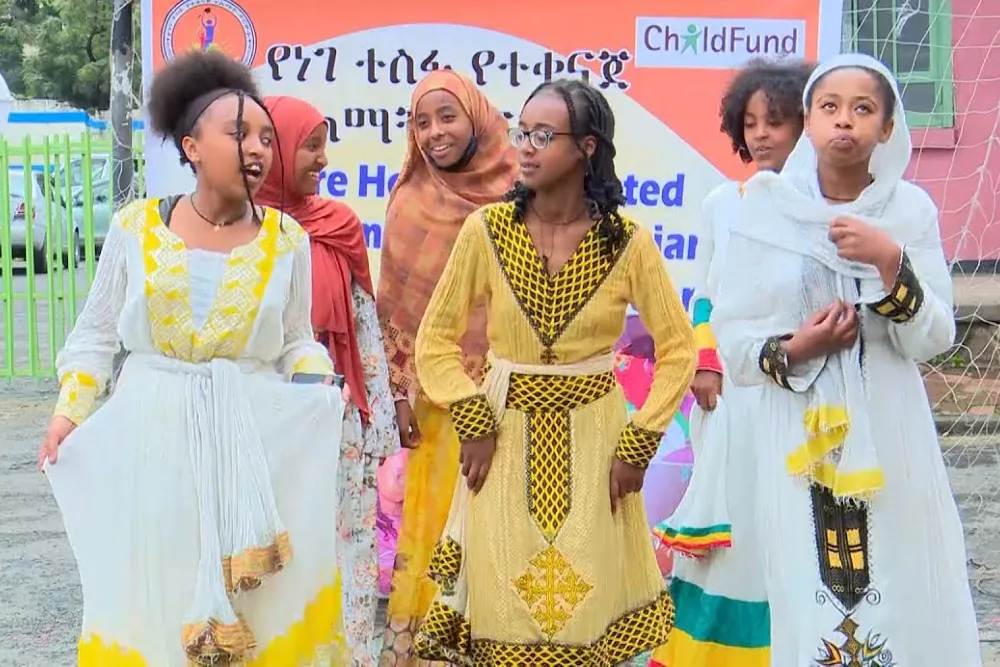
In Ethiopia, menstrual hygiene challenges significantly impact girls' education. Studies indicate that between 43% and 54.5% of schoolgirls miss one to four days of school during their menstrual periods due to factors such as lack of sanitary products, inadequate privacy, and fear of embarrassment.
To address these barriers, ChildFund implements menstrual hygiene management (MHM) activities aimed at improving girls' access to education and reducing absenteeism. These initiatives include providing sanitary products, enhancing school sanitation facilities, and educating communities to reduce stigma associated with menstruation.
Learn more: Menstruation does not stop for conflict.
Featured Project
Supporting Schools Affected by Conflict in Amhara Region.
Following conflict in Ethiopia’s Amhara Region, the Play Matters Project restored access to education for thousands of children. Funded by the International Rescue Committee, the project rehabilitated 10 schools — five in Mersa and five in Woldia — that had been damaged by conflict. The comprehensive response included classroom repairs, provision of furniture and learning materials, school uniforms, dignity kits, school feeding programs, and WASH (water, sanitation, and hygiene) facilities.
The project also trained teachers and students in pedagogy and learning-through-play techniques to enhance the quality of education. As a result, school attendance rose from 85% to 100%, reaching 10,136 children and helping ensure that learning continued even in the aftermath of the crisis.
What's New?
- All Posts
- Child Protection
- Child Sponsorship
- Early Childhood Development
- Education
- Emergency Response
- Environmental Sustainability
- Expert Views
- Food Security
- Health & Nutrition
- Localization
- News & Stories
- Press Releases
- Water, Sanitation & Hygiene
- Youth Development