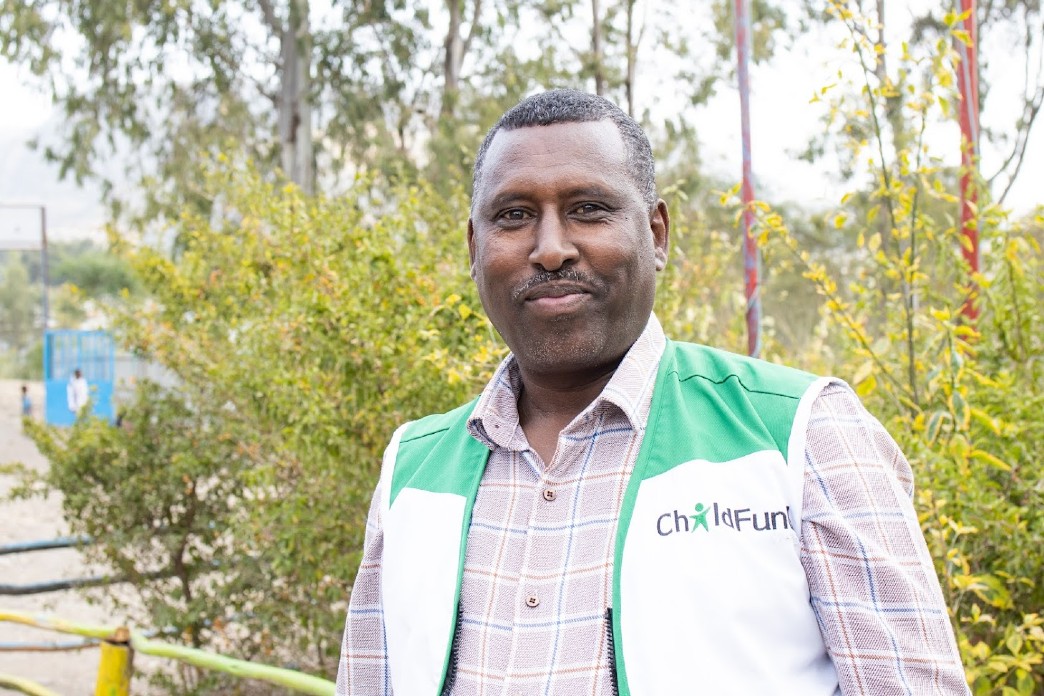
Every child has the right to a clean, healthy, sustainable and abundant environment.

Ethiopia, one of Africa’s most environmentally vulnerable nations faces severe challenges driven by environmental shifts, which affect children and marginalized communities. Ranked among the least prepared countries globally, Ethiopia experiences recurrent environmentally-induced shocks, including prolonged droughts, erratic rainfall, floods, and rising temperatures.

These crises exacerbate food insecurity, water scarcity, and health challenges, undermining progress in areas such as education, nutrition, and child protection. The impact is especially severe in rural areas, where over 80% of the population relies on subsistence agriculture. In 2023 alone, nearly 8.8 million Ethiopians required humanitarian assistance due to drought, highlighting the urgency for action.

Projections indicate that Ethiopia’s average temperature could rise by 1.5–5°C by 2100, intensifying the frequency and severity of natural disasters. Despite contributing only about 0.04% to global greenhouse gas emissions, the country remains disproportionately affected. Ethiopia has made strides through initiatives like its Resilient Green Economy (RGE) strategy, aiming for a carbon economy by 2030. However, gaps in adaptation financing and community resilience persist. As environmental shocks threaten lives and livelihoods, particularly for children, Ethiopia urgently needs sustained investment and partnerships to strengthen adaptation and resilience at the community level.

Our Impact

Facts and  figures from 2025 data.

Centering Children in Building Sustainability

ChildFund recognizes that environmental changes are not only ecological challenges but also a serious child rights crisis, directly threatening children’s survival, development and future.In response, we implement child-centered, locally-led programs aligned with Ethiopia’s national strategies complementing; Climate Resilient Green Economy (CRGE) strategy and the National Adaptation Plan (NAP), by scaling up community action to reach the nation’s goal of carbon neutrality by 2030.Our initiatives also support the Long-Term Low Emission and Climate Resilient Development Strategy (LT-LEDS) 2050, and the Green Legacy Initiative (GLI), a national reforestation campaign .These frameworks guide our commitment to building resilience among vulnerable populations, particularly children and their families.

Nature-based solutions refer to actions that protect, sustainably manage, and restore natural ecosystems to address environmental and societal challenges while enhancing human well-being and biodiversity. These solutions play a crucial role in building community resilience, restoring degraded environments, and supporting sustainable livelihoods, especially for communities closely tied to natural resources.To address environmental degradation and strengthen community resilience, ChildFund integrates nature-based solutions into its programming. One such initiative is in Fentale, in Ethiopia’s Oromia Region, where ChildFund supports a reforestation project led by 60 women’s Village Savings and Loan Association (VSLA) groups. These women established and managed tree nursery sites, raising 321,034 seedlings in just one year. The seedlings were then planted in schools and on degraded communal lands to restore local ecosystems.

In addition to restoring degraded lands, the project promoted the use of sustainable technologies, including energy-saving stoves, solar energy solutions, and small-scale irrigation systems. Beyond its environmental impact, the initiative elevated women as central actors in community-led solutions, strengthening their leadership and economic participation. Learn more.
Despite being among the most affected by environmental degradation, children, youth, and marginalized groups are often excluded from environmental decision-making processes. Their voices and perspectives are rarely considered in the planning and implementation of actions that directly impact their lives and future well-being.
To address this gap, ChildFund is implementing a citizen-led initiative that advocates for inclusive and child-focused environmental action planning. The project aims to ensure that these often-overlooked groups are meaningfully engaged in shaping policies and solutions for a more resilient and sustainable future.
This two-year initiative (January 2023 to December 2025) is being rolled out in Dugda (Oromia Region) and Aynage (Southern Region), in collaboration with local partners who are instrumental in driving grassroots advocacy, strengthening community participation, and promoting collaboration with local governments.
Through the project, ChildFund is equipping children, youth, and community members with the knowledge, tools, and platforms they need to effectively advocate for environmentally resilient policies and community-based solutions.

In partnership with local organizations, ChildFund works alongside communities to help them adapt to environmental changes. Our approach focuses on child-centered solutions that safeguard the future of children and their communities.
We promote sustainable agricultural practices, including drought-resistant crops and responsible land management to ensure food security. To improve access to water, we support rainwater harvesting and efficient water resource management systems, helping communities conserve this vital resource.
Recognizing the vulnerability of weather-dependent farming, we assist in diversifying household income sources, creating resilience against environmental shocks. Additionally, we strengthen disaster preparedness through training to ensure families are better equipped to respond to emergencies.

ChildFund strengthens the capacity of communities to prepare for and respond to environmental shocks. We equip communities with the necessary skills and resources to engage in alternative livelihoods and bolster resilience. By focusing on preparedness and proactive adaptation strategies, we help families to survive and thrive despite the challenges posed by changing weather patterns.

ChildFund is promoting smart agriculture, an integrated approach guiding farmers toward sustainable and resilient farming techniques. We support communities in adopting practices that enhance agricultural productivity, improve adaptability to environmental changes, and reduce greenhouse gas emissions. This includes introducing resilient crops, encouraging soil conservation, and training communities on water management practices like water for production and watershed reclamation.

At ChildFund, we believe in equipping children and youth to lead the charge in tackling environmental challenges. By providing them with opportunities, resources, and safe spaces to engage in environmental advocacy, we help them become influential voices in shaping policies at local, national, and global levels. Their voices are essential in building a sustainable future.
Every year, to mark International Youth Day, ChildFund supports over 5,000 youth to engage in tree planting and community awareness-raising on the importance of environmental conservation, responsible resource use, and sustainable living. These youth-led initiatives promote greener, healthier communities and nurture a generation of environmentally conscious leaders committed to safeguarding the planet for generations to come.

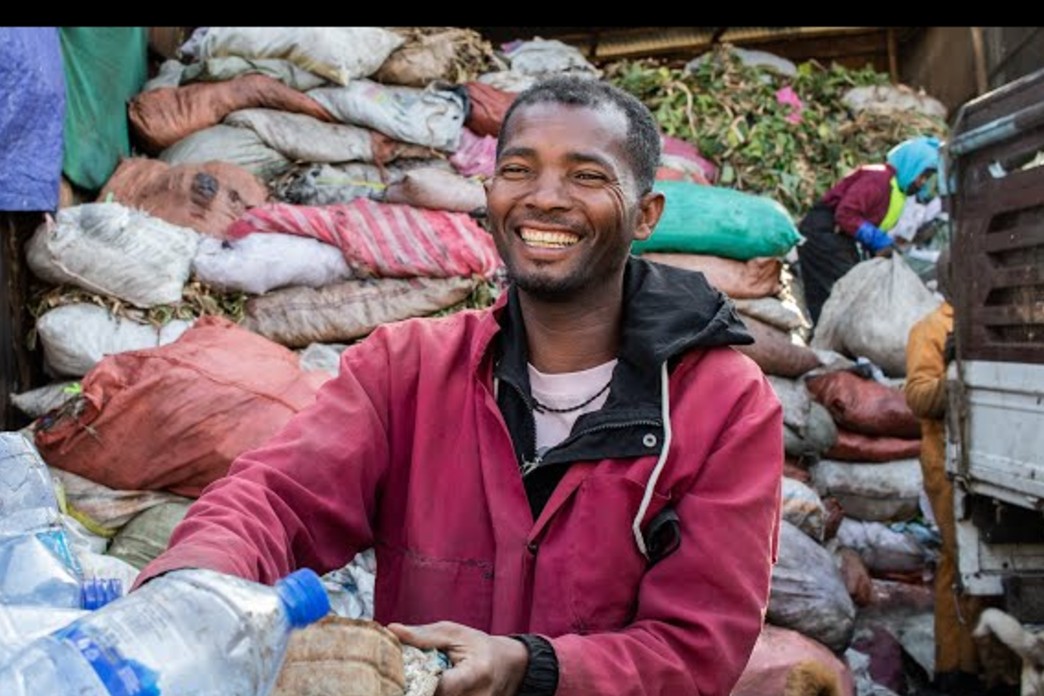
As urban populations rise, cities like Addis Ababa are facing a growing plastic waste crisis. The capital generates more than 2,066 tons of waste every day, overwhelming the city's waste management systems. In informal settlements, where most of this waste ends up, the impact is severe, especially for children. Many live and play near open dumpsites, increasing their risk of disease and exposure to unsafe environments.
To tackle this, ChildFund is working with local partners in Ethiopia to promote better plastic waste management in urban and peri-urban informal settlements. With support from Dow Chemical, the project focuses on reducing, reusing, and recycling plastic waste. Communities are trained on proper waste disposal and encouraged to sort waste at the household level. The project also addresses unemployment by turning plastic waste into a source of income. Youth, women, and marginalized groups are trained to collect, sort, and repurpose plastic for sale. The waste collectors are linked to recycling companies, helping to build a circular economy that benefits both the environment and local families.

Featured Project

Women Restoring Degraded Lands in Fentale, Oromia Region

In the face of rising temperatures and unpredictable weather, women in the East Shewa Zone of the Oromia Region, are leading efforts to restore degraded land, proving that small actions can lead to big environmental and economic changes.
Through a community-led Livelihood initiative supported by ChildFund, 60 Women’s Village Savings and Loan Associations (VSLAs) with over 1,200 women, have established 15 community-run tree nurseries, raising 321,034 seedlings of a variety of trees (shade, fruits, medicinal) within 3 years with an 80% survival rate. In addition to reforestation, the project promotes the use of sustainable technologies, including energy-saving stoves, solar energy solutions, and small-scale irrigation systems. Beyond its environmental impact, the initiative elevated women as central actors in community-led solutions, strengthening their leadership and economic participation

What's New ?

  • All Posts
  • Child Protection
  • Child Sponsorship
  • Early Childhood Development
  • Education
  • Emergency Response
  • Environmental Sustainability
  • Expert Views
  • Food Security
  • Health & Nutrition
  • Localization
  • News & Stories
  • Press Releases
  • Water, Sanitation & Hygiene
  • Youth Development